Almond

The almond is one of the oldest known nuts to humanity. Its origins trace back to the Middle East and
Central Asia, where it was consumed thousands of years ago.
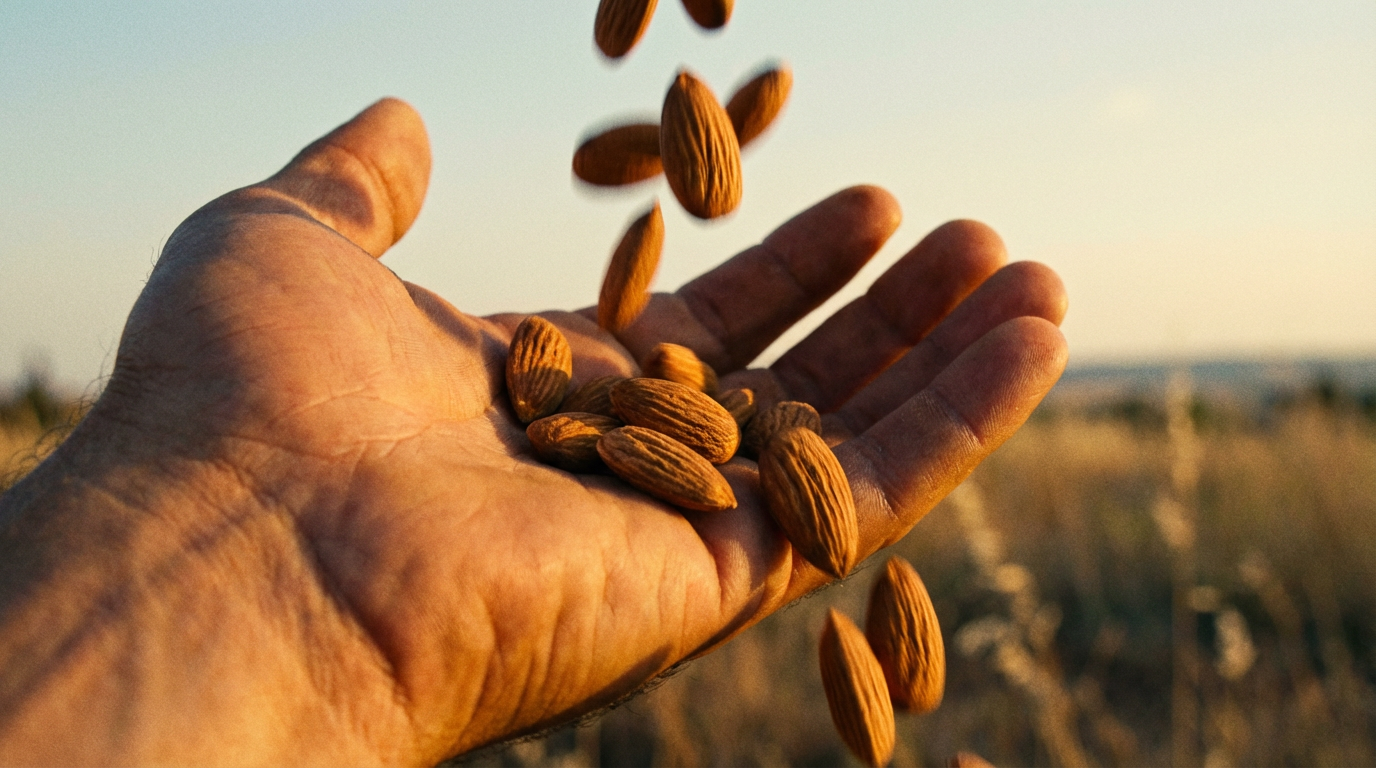
amendoas mao

Ancient peoples such as the Egyptians,
Greeks, and Romans highly valued this nut, considering it a symbol of prosperity, fertility, and good luck. Over time, almond cultivation spread throughout the Mediterranean region.

In Portugal, the almond tree adapted very well to the climate of the south of the country, especially in the Algarve and Alentejo.
Today, the blooming of almond trees at the end of winter remains a natural spectacle highly appreciated
by visitors.


The almond is considered a nut. The fruit consists of several layers: a green, soft outer hull while on the
tree, a hard inner shell, and finally, the edible almond kernel, which is the part we consume.

Almonds can be consumed in various forms, including raw, roasted, with skin, blanched (without skin), sliced, or ground.
In addition to being delicious, it is a highly nutritious food, rich in protein, fiber, vitamins, and healthy
fats.

Processing and Products
Almonds can be processed into various food products. Some of the most common include almond flour
(widely used in pastry), almond milk, almond butter, almond oil, and various traditional sweets.

In the Algarve, almonds are a key ingredient in regional confectionery, especially in iconic treats such as:

  • Dom Rodrigo: A traditional Algarvian sweet made with egg threads (fios de ovos), sugar, almonds, and cinnamon, typically wrapped in colorful foil paper.
  • Morgado de Amêndoa: A typical Algarve cake prepared with almond paste and often filled with egg jam (doce de ovos) or egg threads.
  • Queijinhos de Amêndoa: Small confections made from almond paste and sugar, shaped like little cheeses.
  • Doce Fino do Algarve: Artistic miniatures made with almond paste and filled with egg jam or fig, often molded into the shape of fruits, flowers, or animals.
  • Almond Tart or Cake: Very popular desserts made with almond flour or crushed almond kernels.
  • Sugared/Chocolate-Coated Almonds: Almonds coated in sugar or chocolate, widely consumed during Easter.
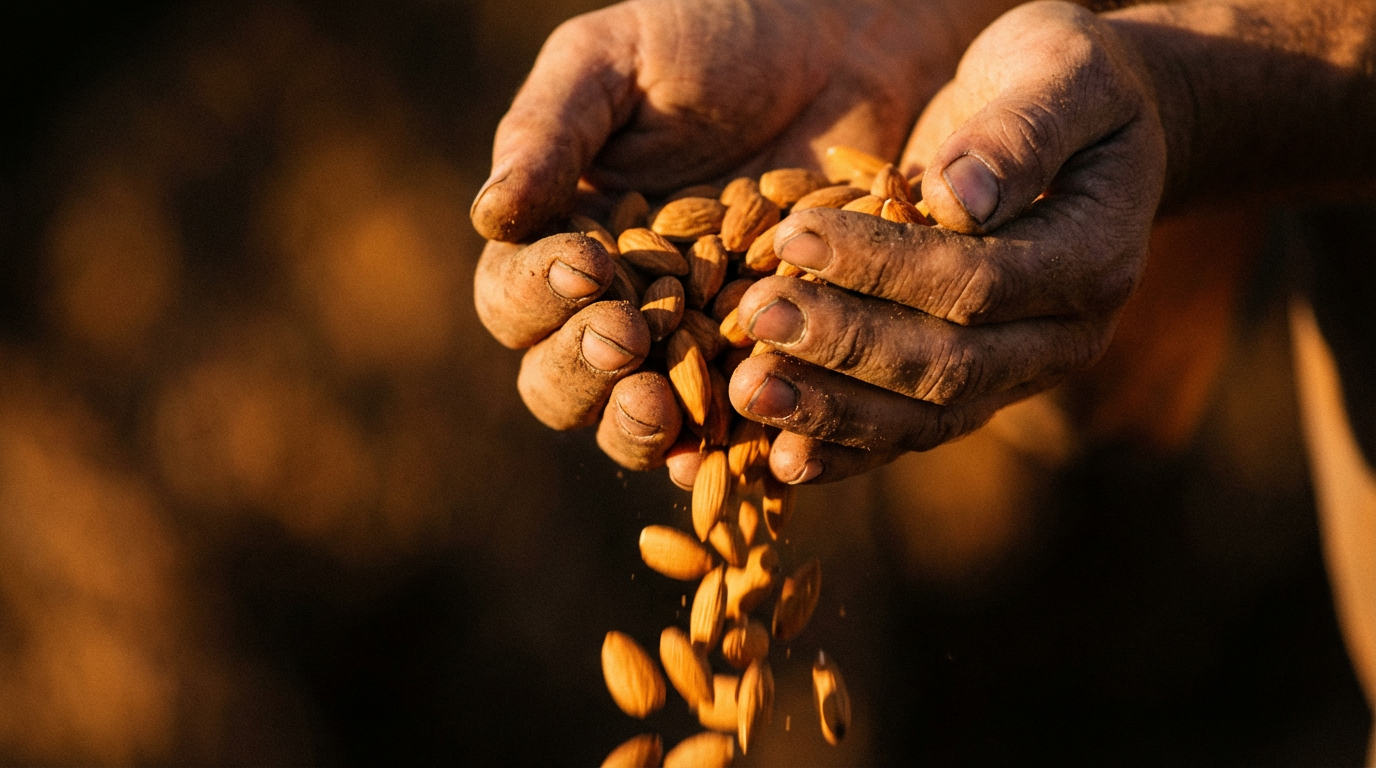
amendoas apanha

Simple Almond Recipes

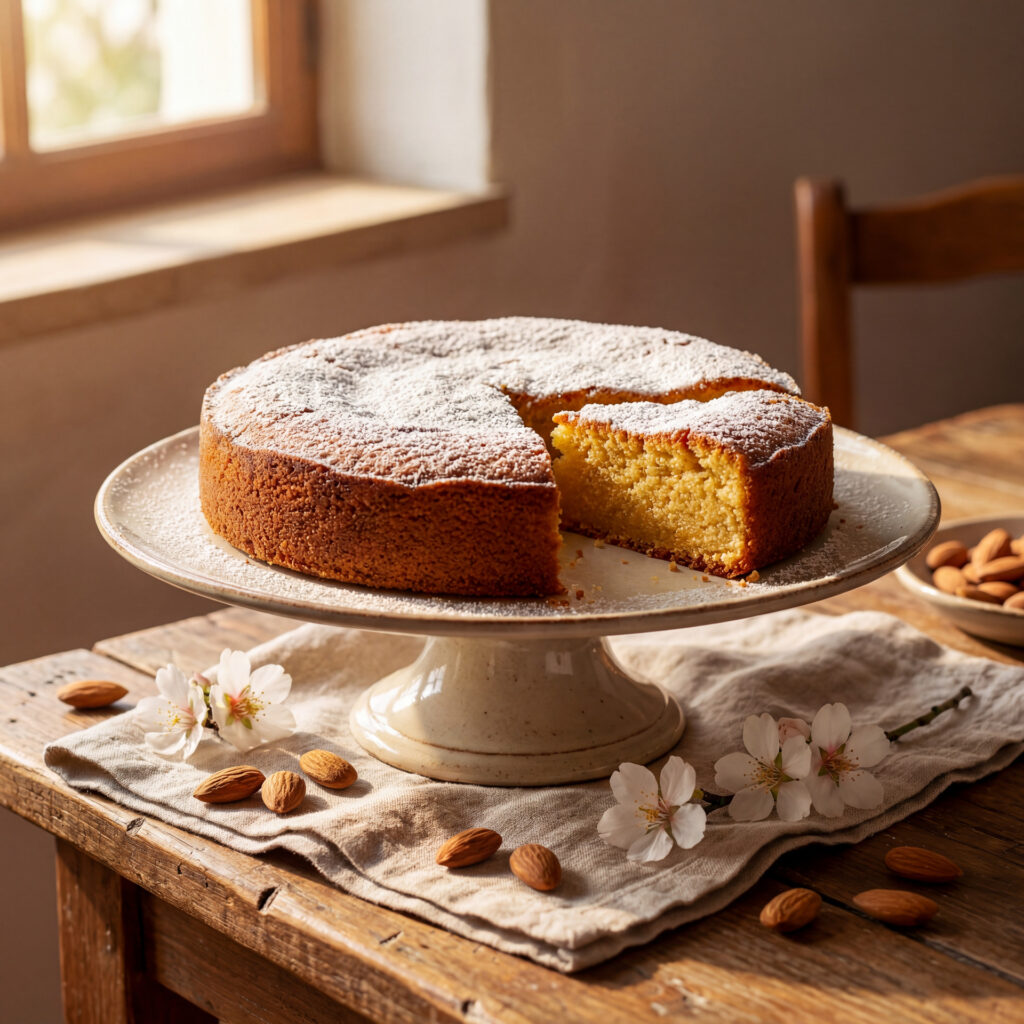
Almond Cake

Ingredients

  • 200 g almond flour
  • 3 eggs
  • 150 g sugar
  • 100 g melted butter
  • 1 teaspoon baking powder

Preparation 
Mix the eggs with the sugar. Add the melted butter and almond flour. Add the baking
powder and mix well. Pour into a cake pan and bake at 180°C for about 30 minutes.


bolodoamendoa

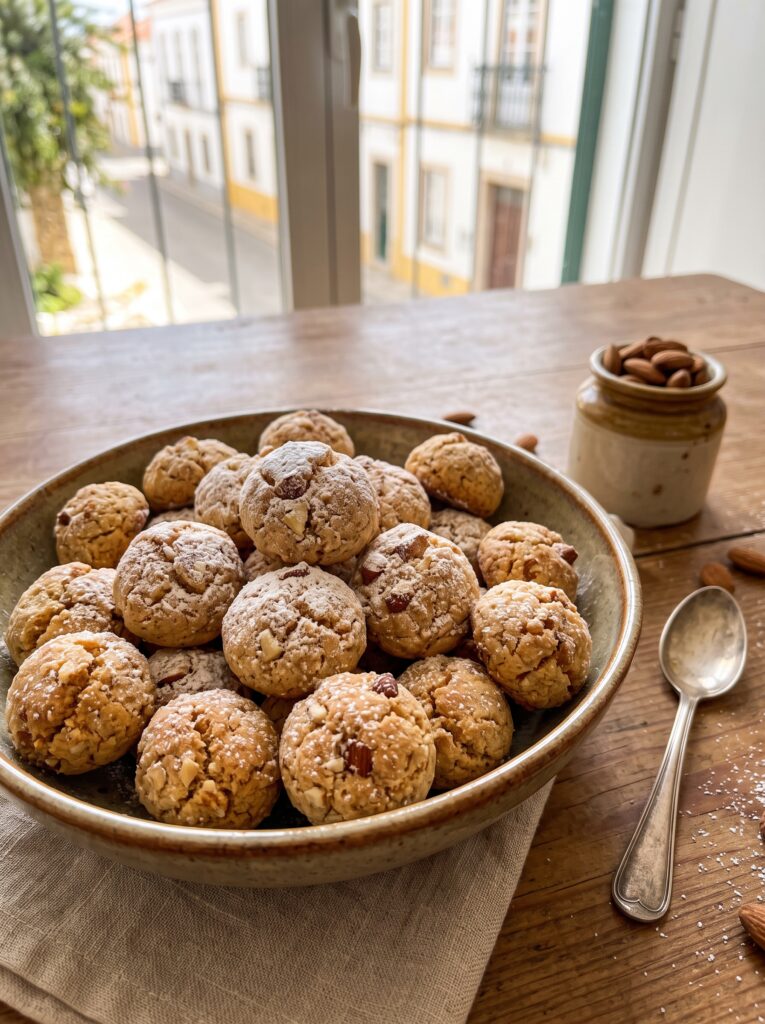
Almond Cookies

Ingredients

  • 2 cups almond flour
  • ½ cup sugar 
  • 1 egg white
  • 1 teaspoon vanilla extract 

Preparation 
Mix all ingredients together until a dough forms. Shape into small balls and place them on
a baking tray. Bake at 180°C for 15 to 20 minutes.


biscoitoamendoa

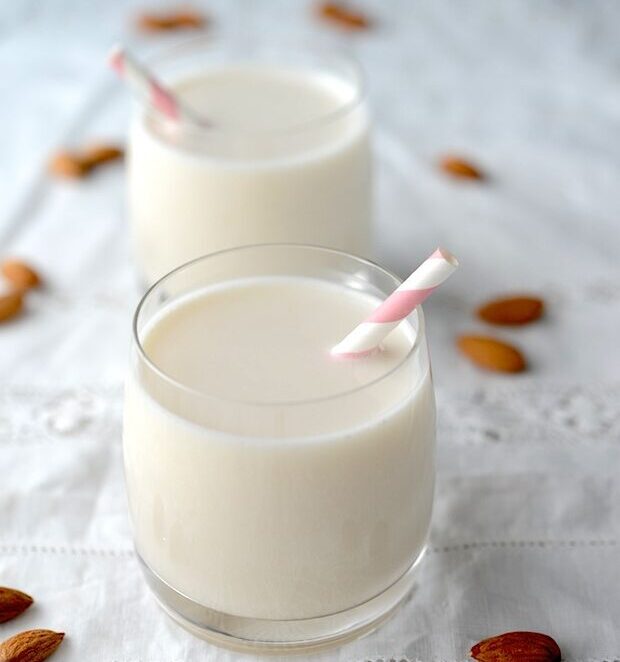
Almond Milk

Ingredients

  • 1 cup almonds 
  • 3 cups water  

Preparation 
Mix all ingredients together until a dough forms. Shape into small balls and place them on a baking tray. Bake at 180°C for 15 to 20 minutes.

leiteamendoa

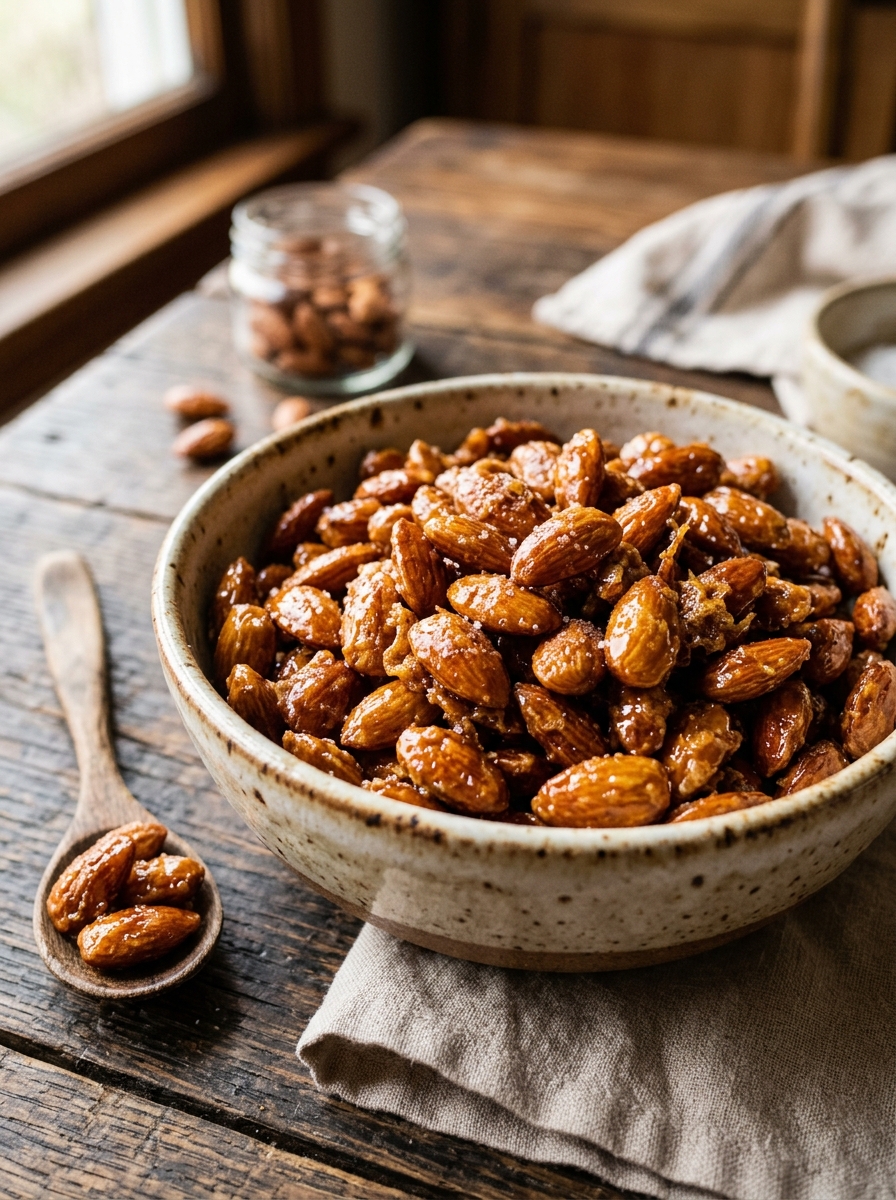
Caramelized Almonds

Ingredients:

  • 1 cup almonds 
  • ½ cup sugar 
  • ½ cup water 

Preparation 
Place all ingredients in a pan over medium heat, stirring constantly until the water evaporates and the sugar caramelizes around the almonds.

amendoacaramelizada
The almond is a fundamental nut in Portuguese culture and gastronomy, particularly in the Algarve. Beyond being a healthy and nutritious food, it is an essential ingredient in many of the region’s traditional sweets.
For visitors, tasting almond-based products is a delicious way to experience local traditions and flavors. The almond tree—with its beautiful blossoms and fruits—remains an irreplaceable icon of southern Portugal’s landscape and agricultural identity.