History
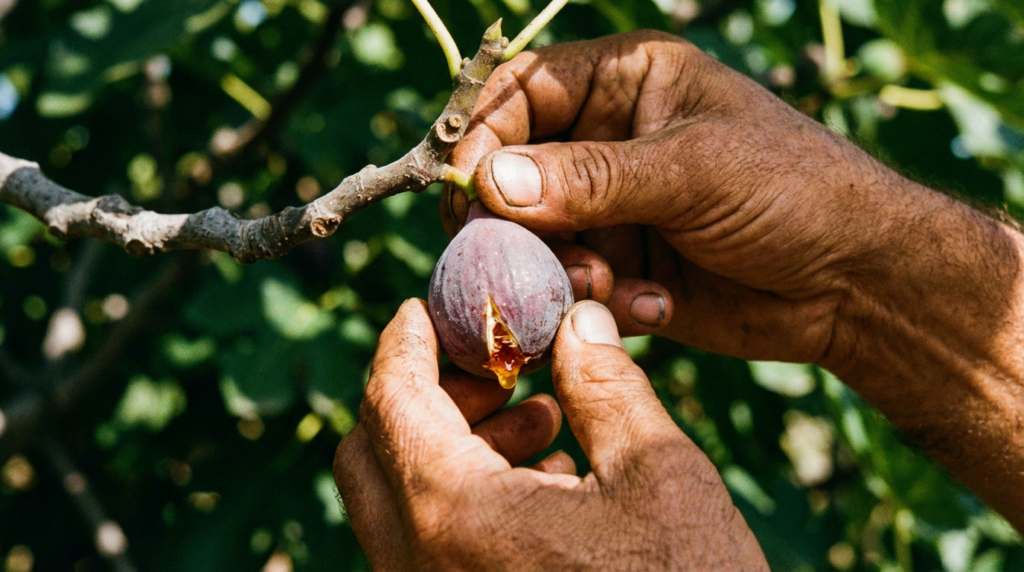
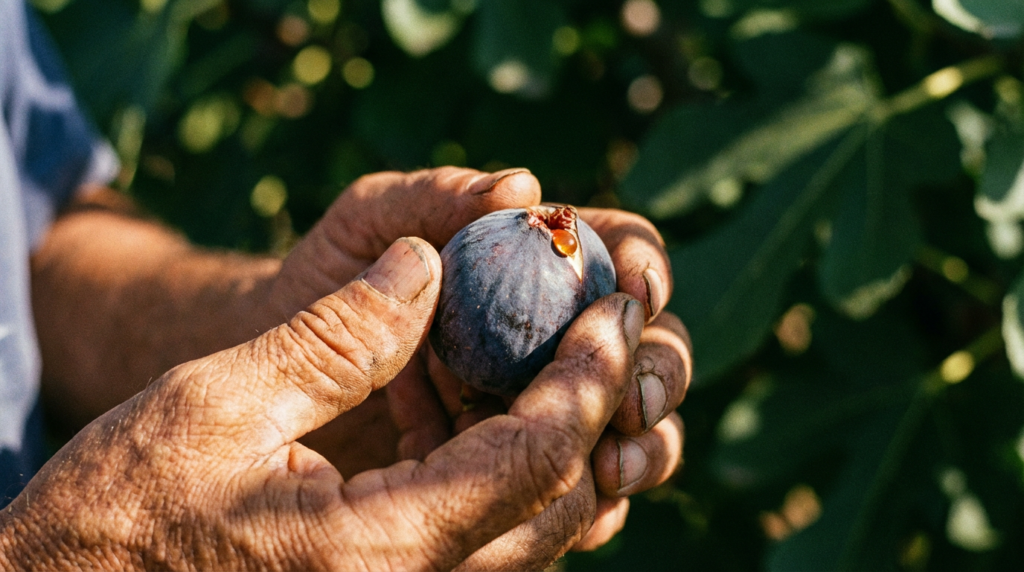
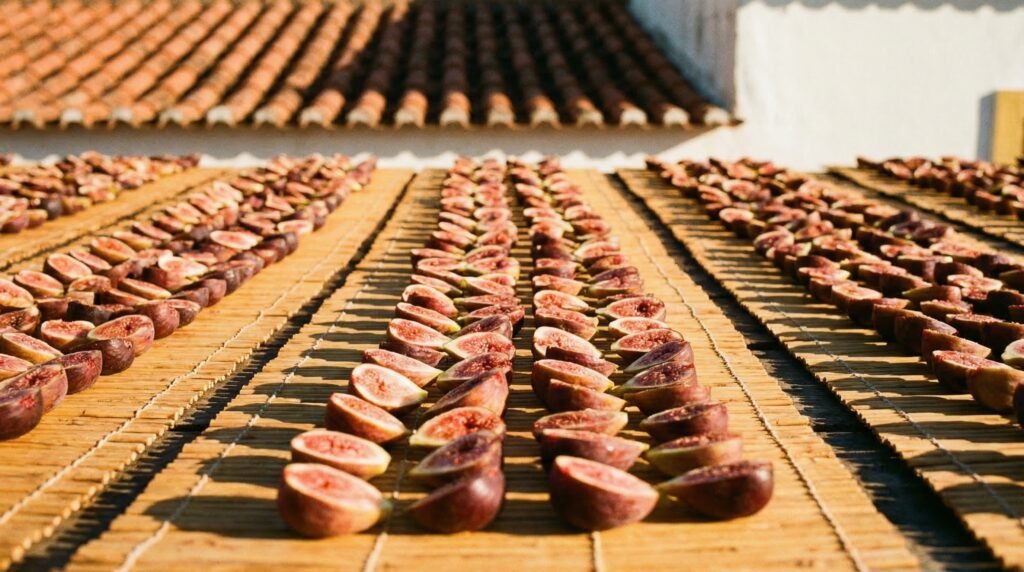
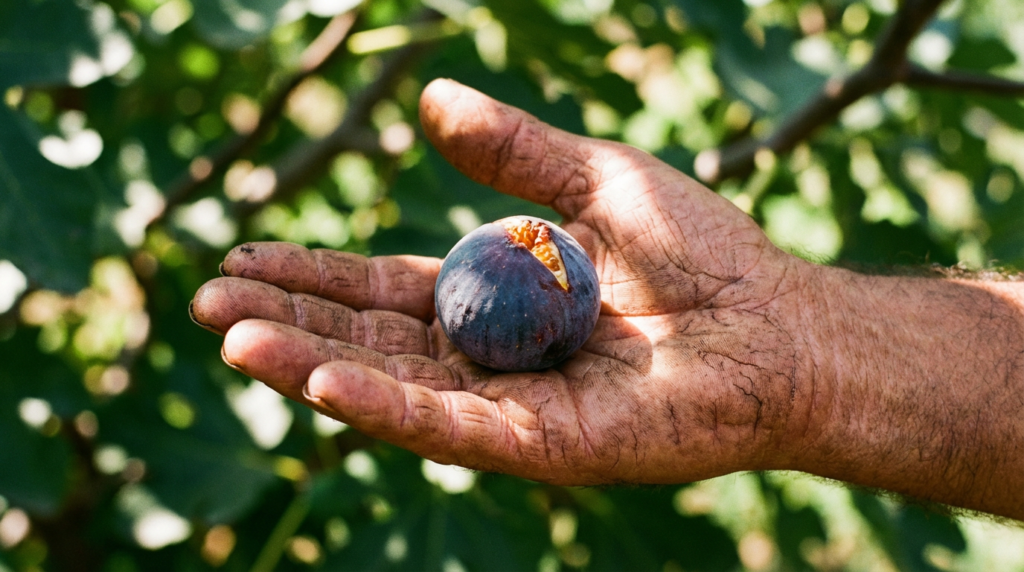
The fig is a sweet, soft, and very nutritious fruit. It can be consumed in two main ways: fresh or dried.
The inside of the fig contains many small seeds, which are a natural part of the fruit. The fig is rich in fiber, vitamins, minerals, and antioxidants, and is therefore considered a healthy and energizing food.
The fig can be transformed into various food products. Among the most common are dried figs, fig jams, traditional sweets, liqueurs, and fig pastes.
In the Algarve, it is very common to find traditional sweets made with figs and almonds, often molded into decorative shapes that imitate fruits.
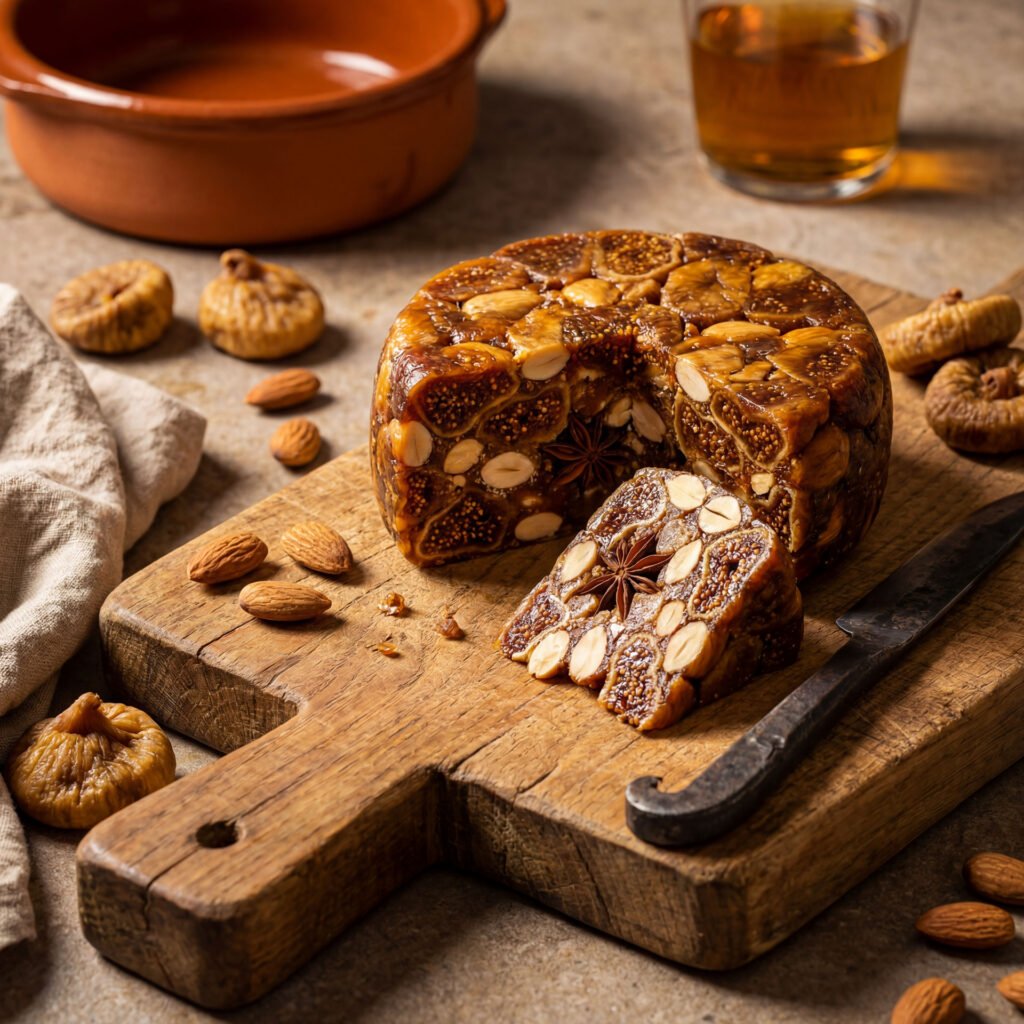
Fig Cheese (or Morgado de Figo): Despite the name, it does not contain milk. It is a dense paste of ground dried figs, almonds, sugar, cinnamon, anise, and sometimes a touch of chocolate or medronho brandy. It is molded into a cheese shape and decorated with whole almonds.
- Fig Star: A visually appealing sweet made with dried figs opened in a star shape, filled with toasted almonds and then baked.
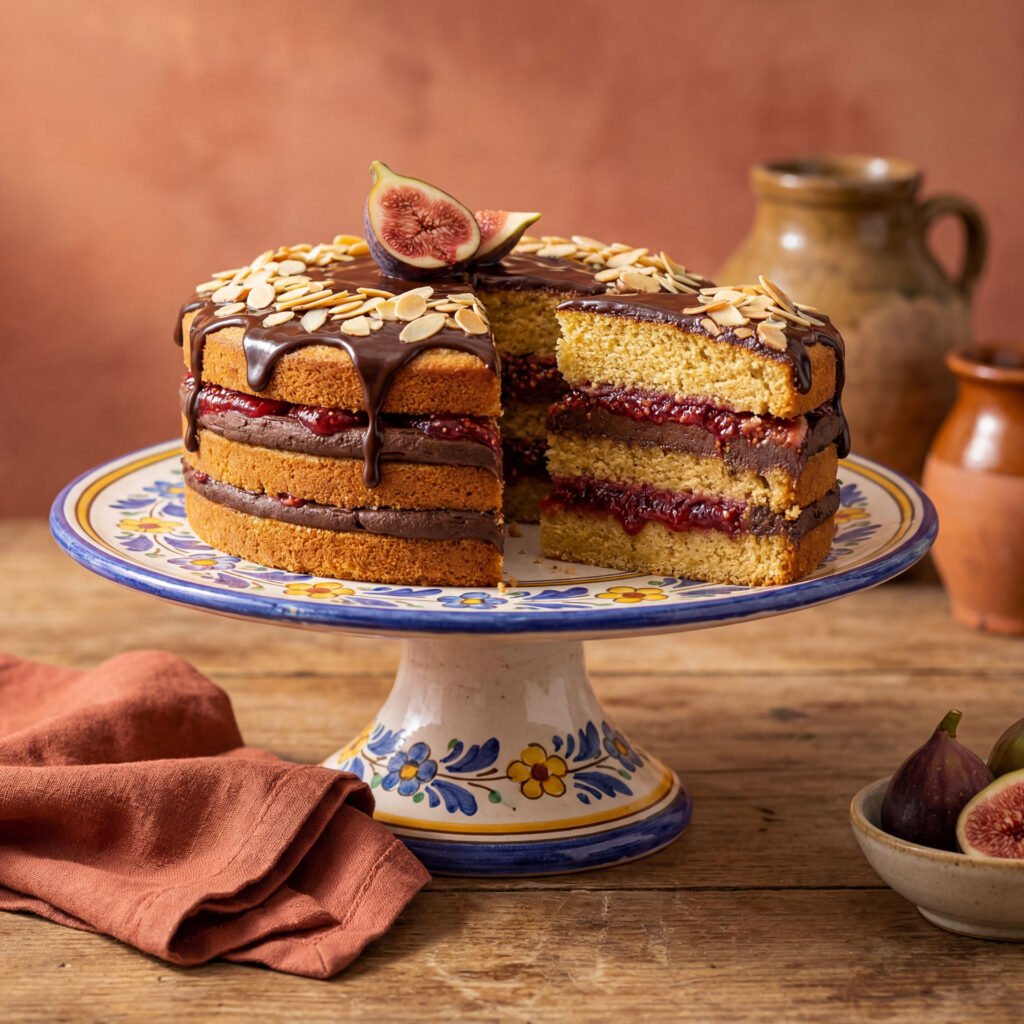
- Fig and Almond Cake: A moist and dark cake, where the chopped dried fig gives it a chewy texture and a deep flavor.
- Fig Tart: Found both in a version with fresh figs (in summer) and with dried figs and dried fruits, being a common presence on the menus of regional restaurants.
- Three Delights Cake: As mentioned earlier, this cake combines fig, carob and almond, being considered the “ambassador” of the flavors of the Algarve’s Barrocal region.
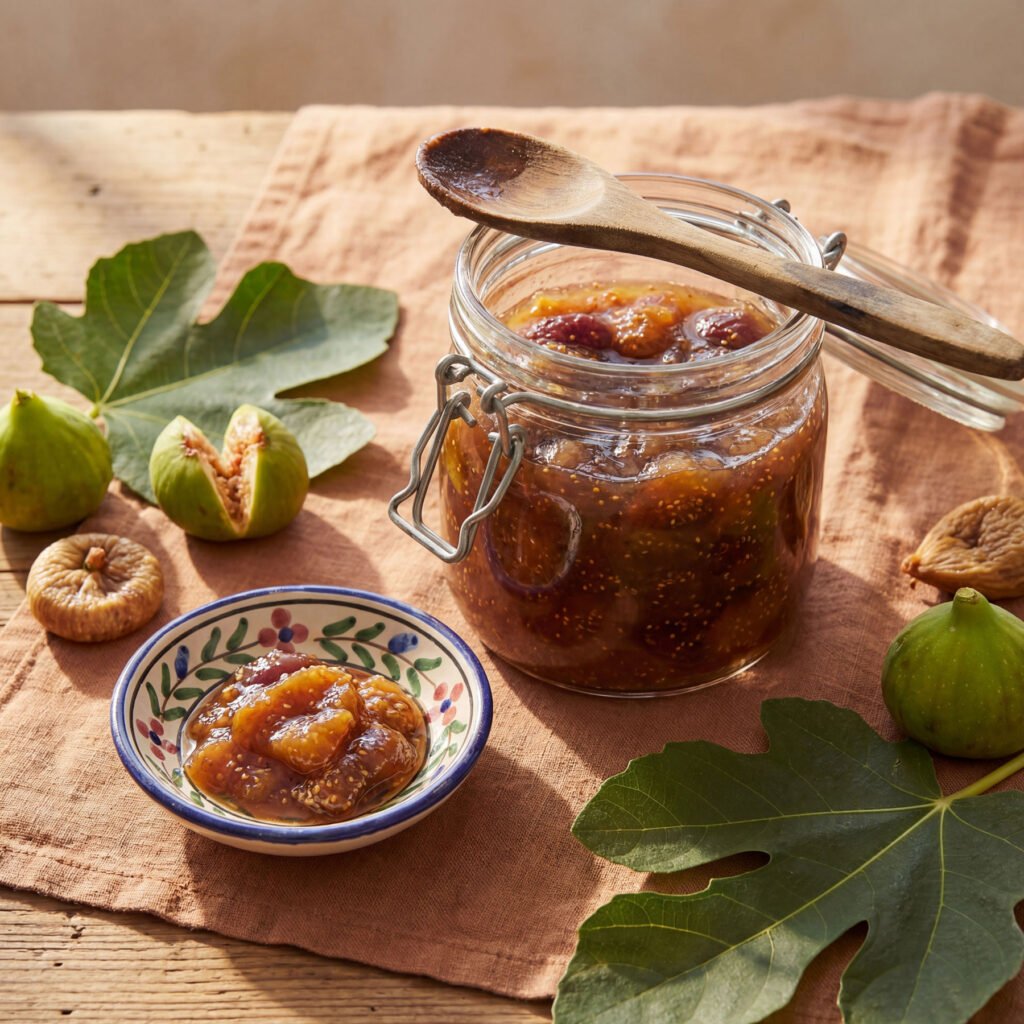
- Fig Jam (Compote): Made with fresh figs, often flavored with cinnamon or lemon zest, ideal to accompany real cheeses or regional bread.
Ingredients
- 1 kg ripe figs
- 500 g sugar
- Juice of 1 lemon
Preparation
Wash the figs and cut them into pieces. Place them in a saucepan with the sugar and lemon juice. Cook over low heat, stirring until you obtain a thick jam. Store in sterilized jars.
Ingredients
- Fresh figs
- Honey
- Cinnamon (optional)
Preparation
Place the figs on a baking sheet. Drizzle with honey and sprinkle with cinnamon. Bake at 180°C for about 15 minutes.
Ingredients
- dried figs
- almonds
- honey
Preparation
Crush the figs and almonds. Mix with a little honey until a paste forms. Shape into small balls or decorative shapes.
Final Notes
The fig is a very important fruit in the agriculture and gastronomy of the Algarve. The fig tree adapts perfectly to the region’s warm climate, producing sweet and nutritious fruits.
This fruit can be eaten fresh, dried, or transformed into various traditional sweets. For tourists visiting the Algarve, trying products made with figs is a delicious way to discover local flavors and traditions.